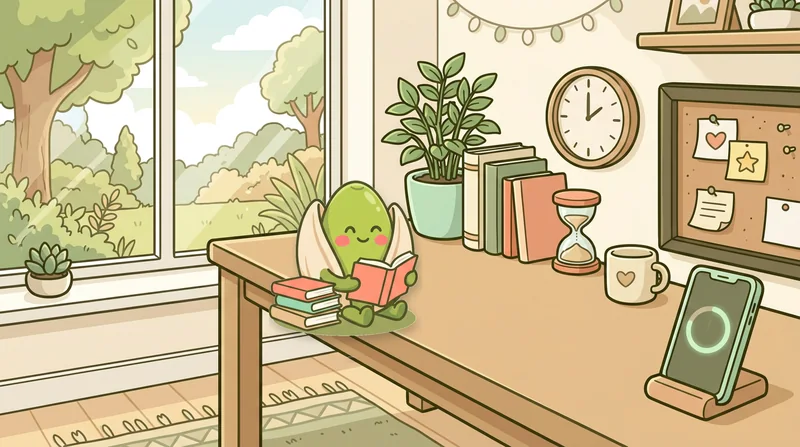

You sit down to read, work, or watch something you were actually excited about. Two minutes in, your hand is already reaching for your phone. You put it back. A minute later, you pick it up again.
If that sounds familiar, you're not alone, and you're not broken. A short attention span is mostly a habit, and habits can be retrained. Here's why focus slips and eight practical ways to get it back.
Is your attention span really getting shorter?
You've probably heard that people now have a shorter attention span than a goldfish. That stat is a myth. It came from a marketing report and has never had solid research behind it.
What researchers have found is that we switch tasks constantly. Psychologist Gloria Mark, who has studied attention at work for about two decades, found that people now spend under a minute on average on any one screen before switching to something else. That's way down from a few minutes in the early 2000s.
So the problem isn't that your brain can no longer focus. It's that your days are full of interruptions, and your attention has adapted to match. The good news is that this works in both directions.
Why it's so hard to focus right now
A few things pull your attention apart:
- Notifications. Every buzz and banner is an invitation to switch, even if you don't open it.
- Short-form content. Endless feeds of quick videos train your brain to expect something new every few seconds. Slower activities start to feel boring by comparison. (We wrote more about this in what is brain rot.)
- Your phone being in reach. Just having a phone on the desk makes it harder for many people to settle into a task, because part of your mind keeps checking for it.
- Self-interruption. Not every distraction comes from outside. Often the urge to switch comes from inside, especially when a task feels hard or boring.
Most of these are about your environment and your habits, not your willpower. That's why the fixes below focus on setup and practice.
1. Put your phone in another room
This is the single biggest, easiest win. When your phone is out of sight and out of reach, picking it up stops being automatic. You'd have to get up, walk somewhere, and decide to check it.
Start with one block a day: your work session, dinner, or the hour before bed. If another room feels like too much, try a drawer or a bag across the room.
2. Turn off almost every notification
Go through your notification settings and keep only what comes from real people who might need you: calls, messages, and maybe your calendar. Everything else, like social apps, shopping, news, and games, can wait until you choose to check.
On iPhone, a Focus mode lets you set this up once and switch it on with a tap. Our guide on how to reduce screen time on iPhone walks through it.
3. Train focus with timed sessions
Attention works like a muscle: it gets stronger with reps. Pick one task, set a timer, and do only that until the timer ends.
- Start small. If 10 minutes is hard right now, start with 10. That's fine.
- Add a little each week. Go from 10 to 15 to 25 minutes as it gets easier.
- Take real breaks. Stand up, stretch, or get water. Scrolling between sessions makes the next one harder to start.
The urge to switch will show up during the session. Notice it, let it pass, and get back to the task. Each time you do that is one rep.
4. Do one thing at a time
Multitasking feels productive, but every switch has a cost. It takes time to get back into what you were doing, and the work you do in between tends to be shallower.
Try single-tasking for one part of your day. Close the tabs you don't need. Eat lunch without a screen. Watch a show without a second screen in your hand. It'll feel strange at first, and that's the point.
5. Read something long
Reading a book is one of the best attention workouts there is, because there's nothing to swipe to. If you haven't read for a while, start with 10–15 minutes a day of something you actually enjoy, not something you think you should read.
If your mind wanders, that's normal. Just go back to where you lost the thread. Most people find it gets noticeably easier within a week or two.
6. Let yourself be bored
Waiting in line, riding the bus, or sitting for a minute before a meeting used to be little pockets of downtime. Now most of us fill every one of them with a phone.
Try leaving a few of those moments empty. Look around, let your mind wander, or just breathe. Being okay with a little boredom makes it easier to stay with a task when it gets slow, instead of escaping into a feed.
7. Cut back on your biggest feed
You don't need to quit social media to improve your focus. But if one app is eating hours of your day, setting a daily limit on just that app helps a lot. Pick the one that pulls you in the most and start with a limit you can actually keep, then tighten it over time.
Need a plan for that? Read how to stop doomscrolling for nine habits that make it easier.
8. Take care of the basics
Focus is much harder when you're running on empty. Sleep, movement, and time outside all make a real difference to how well you can concentrate. A short walk before a hard task, or going to bed without your phone, can do more for your attention than any productivity trick.
How long does it take to improve your attention span?
There's no exact timeline, but many people notice a difference within a couple of weeks of cutting back on interruptions and practicing longer focus every day. Consistency matters more than intensity. A daily 15-minute focus session beats a heroic four-hour session once a month.
If you want a more structured reset, our dopamine detox guide has a gentle 7-day plan.
Focus sessions, but make it a game
We built Brainripe to make this kind of practice feel rewarding instead of like homework. Start a focus session and your buddy ripens while you stay off the apps you chose to limit. Finish real-life habits like reading or a walk and you earn fruit to build your buddy's island. Doomscroll past your limits and your buddy starts to rot. It's a small, visible nudge to keep coming back to what matters.
Attention span FAQ
What's the average attention span? There isn't one fixed number. How long you can focus depends on the task, how interested you are, how rested you are, and how many distractions are around. The popular "8 seconds" figure isn't backed by research.
Can you actually improve your attention span? Yes. Focus responds to practice and environment. Fewer interruptions plus regular, gradually longer focus sessions are the most reliable way to improve it.
Is a short attention span the same as ADHD? No. Lots of people have trouble focusing because of habits and distractions. ADHD is a medical condition with its own diagnosis and treatment. If focus problems are affecting your life in a big way, talk to a doctor.
What's the fastest way to focus right now? Put your phone in another room, close everything except the one thing you're working on, and set a 25-minute timer. Then start.

Give your screen time a buddy.
Brainripe ripens when you stay under your app limits and rots when you doomscroll. Build real habits, earn fruit, and grow your island.
Coming soon to theApp Store